Showing posts with label plant. Show all posts

Thursday, August 4, 2016

Garlic: The Wonder Drug


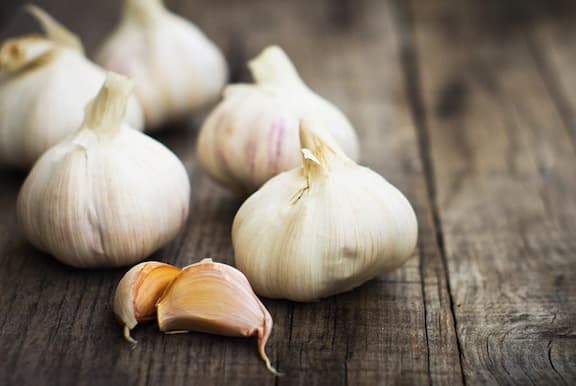
As I'm sure you know, garlic is a strong-smelling pungent tasting bulb, closely related to the onion, that is frequently used in cooking.  What you may not know about is it's powerful fungal fighting, skin clearing, health boosting properties that have been used often in herbal medicine.  With a history of human consumption and use of over 7,000 years, garlic is native to central Asia, and has long been a staple in the Mediterranean region, as well as a frequent seasoning in Asia, Africa, and Europe. It was known to Ancient Egyptians, and has been used both for food flavoring and traditional medicine.

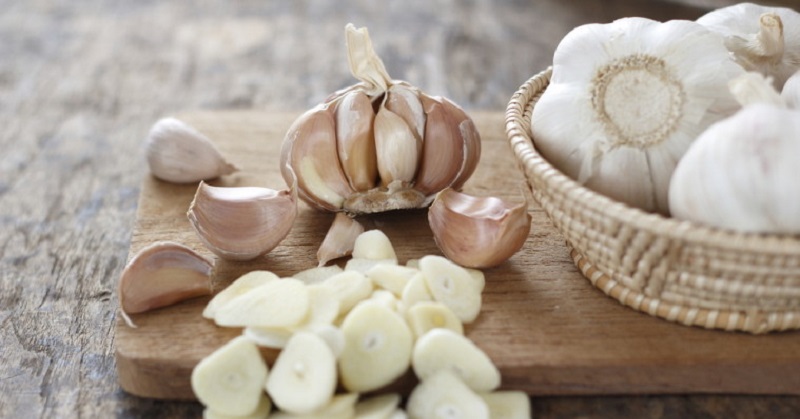
garlic bulb cloves chopped cutting board

"The use of garlic in China dates back to 2000 BC.  It was consumed by ancient Greek and Roman soldiers, sailors, and rural classes (Virgil, Ecologues ii. 11), and, according to Pliny the Elder (Natural History xix. 32), by the African peasantry. Galen eulogized it as the "rustic's theriac" (cure-all) (see F. Adams' Paulus Aegineta, p. 99), and Alexander Neckam, a writer of the 12th century (see Wright's edition of his works, p. 473, 1863), discussed it as a palliative for the heat of the sun in field labor. Garlic was placed by the ancient Greeks on the piles of stones at crossroads, as a supper for Hecate (Theophrastus, Characters, The Superstitious Man). According to Pliny, garlic and onions were invoked as deities by the Egyptians at the taking of oaths.
In his Natural History, Pliny gives a list of scenarios in which garlic was considered beneficial (N.H. xx. 23). Dr. T. Sydenham valued it as an application in confluent smallpox, and, says Cullen (Mat. Med. ii. p. 174, 1789), found some dropsies cured by it alone.
Garlic was rare in traditional English cuisine (though it is said to have been grown in England before 1548) and has been a much more common ingredient in Mediterranean Europe.[citation needed] Translations of the c. 1300 Assize of Weights and Measures indicate a passage as dealing with standardized units of garlic production, sale, and taxation—the hundred of 15 ropes of 15 heads each—but the Latin version of the text refers to herring rather than garlic.  Garlic was used as an antiseptic to prevent gangrene during World Wars I and II."

historical garlic stinking rose bulbs

Now you're probably wondering, "Well, what makes garlic work so well that 3 cloves is equivalent to a dose of penicillin?"   Well garlic produces a chemical called allicin. This is what seems to make garlic work for certain conditions. Allicin also makes garlic smell. Some products are made "odorless" by aging the garlic, but this process can also make the garlic less effective. It's a good idea to look for supplements that are coated (enteric coating) so they will dissolve in the intestine and not in the stomach.

garlic antioxidants anti bacterial anti inflammatory infections


"If garlic had been created in the laboratory instead of by nature, it would probably be a high price prescription drug." (Nutrition Reporter, 2005)

"From Curing a cold to easing asthma, garlic is proving to be a drug-free route to health." – Jane Clarke – The Times

“Garlic is one of the richest sources of organic selenium and germanium. Together, garlic’s disclosed and yet undiscovered nutrients combine to make it one of the best nutritional spices in the world.” German Journal of Oncology, April 1989

garlic plant anatomy labeled

 Facts
  • During the dark ages, people trusted Garlic to ward off the plague and wore garlands of garlic for protection
  • Roman soldiers on long marches ate daily to keep them healthy
  • The Soviet Army relied on garlic juice to prevent wounds turning septic during World Wars 1 & 2, when it earned the nickname Russian Penicillin
    Eleanor Roosevelt swallowed three chocolate covered garlic pills each morning to improve her memory.
  • In the 1950s while working as a missionary in Africa, Dr Albert Schweitzer used it to treat cholera, typhus and amoebic dysentery.
  • You should plant garlic near roses to enhance their scent
  • Plant garlic near fruit trees to keep greenfly away
  • Garlic was entombed with King Tut
  • The longest string of garlic in the world was 123 feet long with 1600 garlic bulbs

garlic health benefits

More resources:

The World's Healthiest Foods-Garlic

Medical News Today

Natural Society-Benefits of Garlic

Home Remedies for Life-How to Use Garlic for Acne


Tuesday, January 15, 2013

Inspired by Evergreen Trees: Variations, Facts, & 50 Photographs


Let me start by saying I am obsessed with evergreen trees with my favorite variation being pines.  Unlike deciduous trees that lose their foliage during cold seasons, evergreen trees retain their leaves all the year round. They add a green interest to the garden throughout the year, irrespective of the season.


Evergreen trees are adapted with modified leaves that help conserve moisture and nutrients, thereby enabling them to thrive in extreme cold or nutrient poor conditions. For example, most of the species bear leaves that are needle-shaped and coated with wax. These leaves also provide insulation, and play a major role in protecting the branches from sun and frost. Nonetheless, you will also come across some evergreens having broad foliage. 


Trees belonging to the evergreen type thrive better in varying temperature and weather conditions. Thus, they are more prevalent in tropical regions, as compared to temperate climates. Though evergreens can tolerate cold climatic conditions, they are rare in the polar regions of the world. Evergreen trees, due to their rich aesthetic value, are most preferred for use in landscape designing, and as shade garden plants and ornamentals. Since most species are perennial, they are also used in rock gardens. 

Popular Types of Evergreen Trees

The list of evergreen trees includes many varieties; some bear lovely flowers, while others bear inconspicuous blooms. Also, there are non-flowering cultivars too. If you are interested in incorporating evergreens to your yard, make sure that you keep enough space from the remaining vegetation (if any). Since these plants make the soil acidic, they may kill the plants that are planted close to them.

Cypress Tree
Cypress, due to its soft, feathery texture and symmetrical shape, is one of the most preferred evergreen trees in the United States. It is drought-tolerant and grows about 3 - 4 feet per year. This tree is easy to prune and shows great adaptability. Cypress is mostly used in creating privacy hedges and borders around property. For better growth and development, plant cypress keeping a 6 feet distance between two trees.

Pine Tree
The lovely pine tree needs no introduction for avid gardeners. There are about 115 species of pine. The growth rate of this evergreen tree averages 3 - 4 feet per year. Though these fast growing evergreen trees are drought resistant, they may be either tolerant or intolerant to frost. Most hobbyists prefer growing pine trees as ornamentals (mainly because of their needle shaped leaves), while others planted them for creating shade.

Fir Tree
These upright growing, symmetrical shaped conifers are excellent ornamental trees for formal and informal gardens. Once developed, the soft, needle-like foliage remains in the twigs for about 5 years. Growth rate recorded for this evergreen tree is 1 - 2 feet per year. Sufficient spacing (at least 15 - 20 feet between two plants) is required to grow fir trees.

Cedar Tree
A plant having strongly fragrant wood, cedar is another tree of choice for landscapers all across the globe. The tree exhibits a conical shape in the initial years, while the canopy slowly turns more of a flat type in the later years. Depending upon the variety, tree height and growth rate differ. Say for instance, the annual growth rate of atlas cedar measures 1 foot, while Eastern red cedar growth rate is 1 - 2 feet per year.

Spruce Tree
You might be familiar about the Norway spruce (or the true Christmas tree), which is a hardy and large spruce species. Some species grow to over 200 feet in the natural habitat. The thin leaves are arranged in a whorl pattern around the branches. The downward pointing, large cones are another characteristic attribute of spruce trees. With a growth rate of about 2 - 3 feet per year, this majestic tree is sure to catch your attention in the coming years. 

Hemlock Tree
Best suited for planting as a specimen tree, you can also plant it in groups to serve as windbreaks. Like other conifers, the pyramidal-shaped canopy and narrow leaves are characters of hemlock tree. When maintained in moist and well-drained soil, this shade tolerant tree grows at a medium rate. The tree height at maturity depends on which cultivar you have introduced in your garden. 

Juniper Tree
It shares same taxonomic plant family with the cypress tree. Like other coniferous tree species, the leaves of juniper tree are small and needle-like. You can identify older foliage from the scales, which are absent in young leaves. This is one evergreen plant that can be maintained as a small tree or a bushy shrub. Based on variety, the growth rate is either slow (8 inches per year for regular juniper) or medium (10 - 18 inches for Spartan juniper).

Thuja Tree
For those of you who are looking for rapid growing trees, thuja is an excellent choice. Yes, it is the fastest growing evergreen tree in the world. Once thuja gets established, it grows about 3 - 5 feet annually. Adaptability to varied growing conditions and resistance to pests and drought add to the popularity of thuja as a landscaping tree. When planting thuja as a windshield or a privacy hedge, keep a 5 - 6 feet gap between two trees. 

Holly Tree
Of the many identified species of evergreen hollies, the American holly is the most preferred cultivar. Dark green, leathery foliage with spiny edges and bright red berries are the identifying features of holly tree. The growth rate is slow to medium, and you need to plant 3 - 4 hollies to promote cross-pollination and fruiting. During the initial growing years, the tree grows in a thick pyramidal shaped canopy.

Eucalyptus Tree
Eucalyptus is another popular evergreen tree, which grows to a maximum height of 6 feet per year. Almost all the species of eucalyptus are pest and drought resistant. The barks and leaves of eucalyptus are aromatic, and they are used as repellents for insects and pests. A good option for providing shade, you can plant eucalyptus tree anywhere as per space availability and landscape design. 

Magnolia Tree
A classic example of broad-leafed evergreen tree is the magnolia. You can find a lot of magnolia hybrids in the nursery center. What is so impressive about this evergreen angiosperm is, bearing of conspicuous and sweetly scented flowers. The growth rate is slow to medium. When allowed to grow naturally, it reaches a height of about 90 feet. Hence, you will need a larger space for planting this beautiful evergreen tree.

Well! These are some of the commonly grown evergreen trees. Other than these, you will find many other species native to your area. So, carefully select the cultivars that will grow best in the prevailing climatic conditions. You should plant these trees where there is enough sunlight and water, or as per the specific requirements of the plant species. If your area is prone to dry conditions, choose only the drought tolerant cultivars.


If you're into survival like myself, you might find this article interesting or useful: The Best Types of Evergreen Trees for Wilderness Survival

Or this one if you'd like to know how to grow your own pine trees: How to Grow Pine Trees

Inspired: Evergreen Tree Photographs


Related Posts Plugin for WordPress, Blogger...